

Waterproofing and Environmental Requirements of USB Disposable Temperature Data Loggers
Release Time:
2025-11-28 09:40
source:

USB Disposable Temperature Data Loggers are widely used in cold chain transportation, food, pharmaceutical, and biological sample transport. Their waterproofing performance and environmental requirements directly affect the reliability of measurement data and the effective lifespan of the logger. Understanding their waterproof rating and applicable environments is crucial for ensuring accurate temperature monitoring during transportation.
Waterproofing is a key indicator for USB Disposable Temperature Data Loggers. Most disposable temperature loggers are designed to withstand humidity, rain, or splashes during transport, and therefore typically have a certain waterproof rating, such as IP65 or IP67. IP65 protects against water jets, while IP67 allows for short-term immersion in water without affecting normal operation. When selecting a logger, users should choose a product with an appropriate waterproof rating based on the actual humidity of the transport or storage environment and the potential for liquid contact, to avoid data loss or damage due to moisture entering the device.
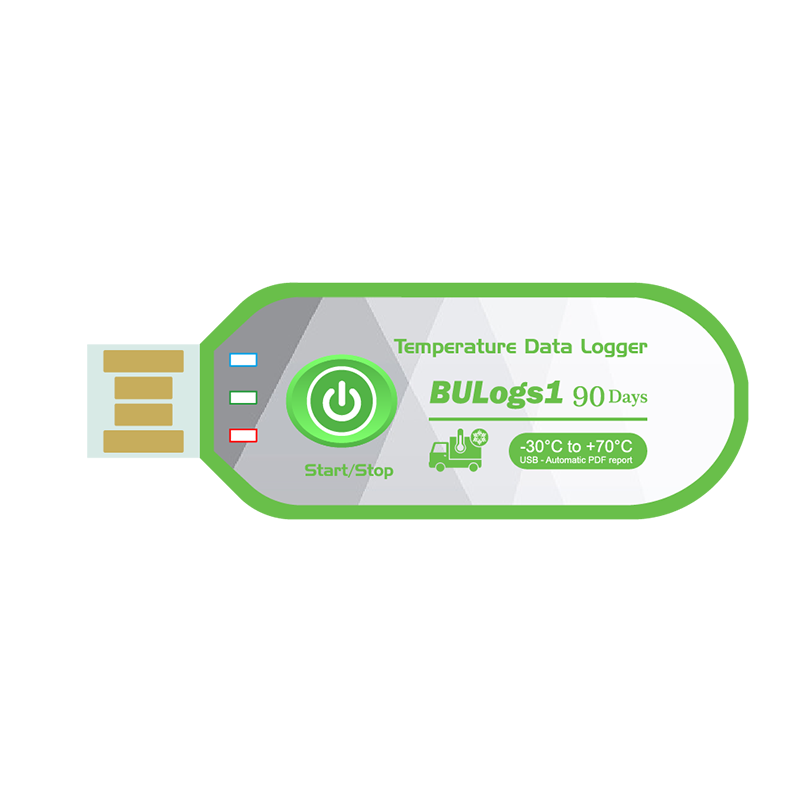
The operating temperature range is also a key factor in ensuring the normal operation of the logger. USB disposable temperature data loggers typically have a nominal operating temperature range, such as -30°C to +70°C. Users should ensure operation within this range to prevent battery performance degradation due to low temperatures or accelerated battery consumption due to high temperatures, which could affect recording integrity. Furthermore, the logger should be stored and transported away from prolonged exposure to extreme temperatures or strong sunlight to maintain measurement accuracy.
Humidity is also an important consideration. Although most USB disposable temperature data loggers are quite waterproof, condensation may still occur during prolonged use in high humidity environments, affecting sensor measurements. To ensure data reliability, it is generally recommended to place the logger in its packaging or container, avoiding direct contact with liquids, and ensuring the packaging is well-sealed.
The operating environment should also avoid severe vibration and strong electromagnetic interference. The internal sensors and circuitry of disposable temperature loggers are quite delicate; excessive vibration or strong magnetic fields may cause data anomalies or recording interruptions. Therefore, during transportation, the logger should be securely fixed to avoid direct collisions with heavy objects.
When using a USB disposable temperature data logger, it is necessary to comprehensively consider its waterproof rating, temperature range, humidity conditions, vibration, and electromagnetic environment. Proper selection and standardized use not only ensure stable operation of equipment during transportation and storage but also guarantee complete and reliable temperature data, providing strong support for cold chain transportation, pharmaceutical logistics, and food safety.
NEWS
Send Us A Message
After receiving your message, we will contact you as soon as possible
Address: 207, Block A, DingXin Science Park, Honglang North 2nd Road, ShenZhen
Copyright © 2024 Shenzhen SigmaWit Technology Co., Ltd.